 English
 Vietnamese

Labor Hero Nguyen Thi Nga, Chairwoman of BRG Group, Standing Vice Chairwoman of SeABank, and Chairwoman of the Vietnam Association of Private Entrepreneurs, shares that she continues to work 14 to 16 hours a day. This demanding work schedule has spanned several decades, from the early days of her entrepreneurial journey with just 30 employees to the development of an ecosystem employing more than 22,000 people.
Throughout this journey has been her love for her homeland and country, and her pride in being Vietnamese. Ultimately, the value of business creation must be measured by what it contributes to people, society and the nation.
During her overseas business trips and at international events, many people who meet and greet her mistake her for being Japanese, Thai or from another Asian country.
She always proudly introduces herself: “I'm Vietnamese.”
I am Vietnamese.
Madame Nga recounts this story with great enthusiasm: “I am proud to say that I am a patriot and have a deep sense of national pride. I want our international friends to respect Vietnam and its people.”
Looking back to the early 1990s, during her visits to Germany and several developed countries in Eastern Europe, Nguyen Thi Nga witnessed a world vastly different from Vietnam at the time, with significant gaps in infrastructure, services and living standards. Yet, rather than feeling discouraged by these disparities, she returned with a stronger determination to take action, driven by the belief that: “Our country has every opportunity to develop even further and, above all, to raise the quality of life for everyone to a higher level.”
She has always asked herself: How can the high-quality products and services available in developed countries also be brought to Vietnam? How can people share in the benefits of development? These questions have guided her investment decisions ever since.
For Madame Nga, national pride does not mean closing Vietnam off from the world. Quite the opposite: she wants Vietnam to progress faster and integrate more deeply with the international community.
To achieve this, Vietnam must seek out the best people, the most advanced and modern technologies, and the highest standards to learn from.
When she entered the golf industry in the late 1990s, Madame Nga had never even held a golf club. At the time, Vietnam’s domestic golf market was still very small. To develop this new field, she sought out experienced professionals, from golf legends Jack Nicklaus and Greg Norman to other international partners.
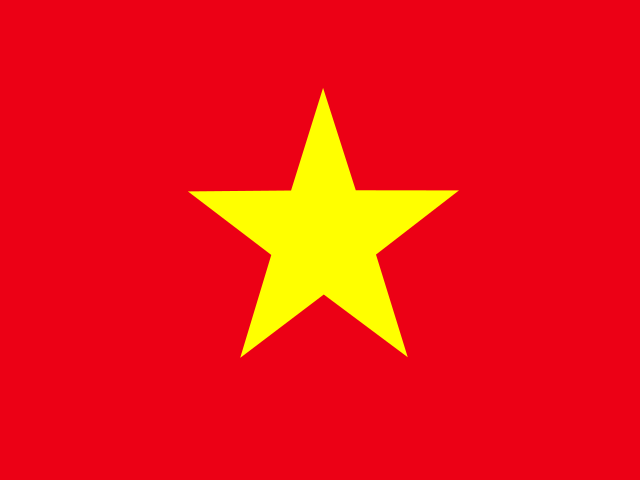
During a visit to Ohio, USA, to work with world-renowned golf course designer Jack Nicklaus, the red flag with a gold star was placed on Vietnam’s position on the golf map of the golf legend. Madame Nga felt immense pride and emotion at the sight.
That small flag on the map symbolized Vietnam’s presence in the international golf network, made possible through her strategic partnership with Jack Nicklaus.
For Madame Nga, partnering with leading global brands is an opportunity for Vietnamese people to gain access to technology, knowledge and management practices. She is committed to bringing these standards to Vietnam, learning from them and gradually mastering them.
“Vietnamese people are absolutely capable of achieving this.” This is the strong belief that gives her the confidence to proudly tell the world: “I’m Vietnamese.”
She is not only proud to be Vietnamese; she also wants to prove that Vietnamese people are capable of achieving anything.
Her belief in the capabilities of Vietnamese people is also reflected in her acquisitions of assets from foreign investors. In her view, in an integrated economy, Vietnamese businesses must have the confidence to participate in the market and seize opportunities just as their international counterparts do.
If national pride explains why Madame Nga has always sought to bring Vietnamese businesses closer to international standards, another question helps explain her choice of industries: What is the ultimate purpose of business?
For her, the answer goes beyond profit. Within the BRG ecosystem, there are business sectors that, according to Madame Nguyen Thi Nga, even the Investment Committee has suggested reconsidering because they “are not profitable,” or require considerable effort and time before they can deliver results.
However, she does not believe that a multi-industry corporation should focus solely on sectors offering “super profits.” “There must be business sectors that contribute to the lives of the community and society,” she says.
That is why, for BRG Group, retail is a sector dedicated to serving people's everyday needs.
Another example is the rice cultivation partnership with a Japanese company boasting more than 100 years of experience, aimed at producing rice for export to Japan. Madame Nguyen Thi Nga recognizes that the investment may take many years to become profitable, yet BRG has chosen to pursue it.
In making these decisions, she considers not only the value of the products, but also the benefits to local people and the contribution to the country.
In Madame Nga’s view, a business does not develop in isolation from society. As a business produces more goods and services, it contributes more to the state budget, creates more jobs and enables workers to earn better incomes.
By this logic, every healthy business becomes a healthy cell within the broader economy.
From just 30 employees at the beginning of her entrepreneurial journey, the BRG ecosystem now provides employment for more than 22,000 people. She often mentions this figure in conversations. To her, these are the people who work alongside her, and their livelihoods represent a responsibility behind every management decision she makes.
Her pursuit of value has also led her to Chu Dau ceramics, a Vietnamese pottery tradition with a history spanning hundreds of years. Once carried by ships across the seas to destinations around the world, these ceramics have become treasured artifacts in many countries and are now displayed in 46 museums across 32 countries.
What particularly moves her is the story of a Vietnamese woman who practiced pottery nearly 600 years ago. Businesswoman Bui Thi Hy, regarded as the founder of the Chu Dau pottery tradition, was not only the first female entrepreneur in Vietnamese history but also an exemplary figure embodying both talent and virtue—a remarkable woman of exceptional ability in Vietnam’s history. Inspired by her vision and strength of character, Madame Nga has sought to continue developing and reviving this ancient ceramic tradition, bringing it into contemporary life.
For Madame Nga, investing in Chu Dau is about preserving a cultural heritage while finding ways to bring Vietnamese products to international markets. This story continues the pursuit that has guided her since her earliest overseas journeys: embracing the best the world has to offer while creating opportunities for Vietnamese values to reach a global audience.
At the heart of these two directions lies a question that Madame Nga continually asks herself: “What more value can I create?”
To turn an idea into reality, Madame Nguyen Thi Nga devotes considerable time and attention to its execution. She recalls a lesson from around 1996, when a one-week delay in an import transaction turned an expected profit into a loss.
That experience taught her the importance of thorough planning and close monitoring at every stage of implementation. Nearly three decades later, she still remembers this lesson when describing her working approach.
“I work meticulously and pay close attention to every detail, staying closely involved with each management team member throughout the implementation process to achieve the best possible results.”
What is even more remarkable is that the 14-to-16-hour workday did not begin only after she had achieved success. This demanding pace has stayed with her through many stages of her journey.
On the day she received the title of Labor Hero, memories of the journey came flooding back: construction sites, hotels and golf courses; nights spent working in brightly lit offices; the 30 employees at the beginning and the team of 22,000 people today. But there were also memories of the kitchen, of her cooking, caring for her family and spending time talking with her grandchildren.
These two worlds coexist in the life of one woman. Her family is a pure and powerful source of renewed energy. Her journey has not been defined by working day and night for a few months to complete a project, or by several years of determined effort to build a business, but by perseverance sustained over many decades.
Yet when speaking about the title she has received, she turns the conversation towards the work that lies ahead. She thinks about training the team that has helped her build the business, as well as her continued responsibility to contribute to society and the country.
“To contribute more, work harder and accomplish more meaningful things for society,” she says of what needs to be done following this recognition.
She hopes to see BRG Group expand its presence overseas, with offices in Singapore, Tokyo, New York and other major cities. She also wants the younger generation, aspiring entrepreneurs and, in particular, women entrepreneurs to go further than her generation has.
After many journeys around the world, Labor Hero Nguyen Thi Nga still holds firmly to one belief: Vietnamese people are “warm-hearted, very intelligent, highly capable and resourceful.” If everyone strives harder and learns to “build stronger bonds,” Vietnam can develop rapidly and stand alongside developed nations.
This Labor Hero continues to work tirelessly for 14 to 16 hours every day, stepping onto the world stage with pride to declare: “I'M VIETNAMESE.”
“I am Vietnamese” is no longer merely an introduction. It is a source of pride that she has demonstrated to the world through a lifetime of work and dedication to her family, those around her, the community and the country.